Haolin Huang
Do more, know more, be more !

Medical AI · Virtual Healthcare · Nuclear Medicine
I am a Ph.D. candidate in Biomedical Engineering at ShanghaiTech University, working with Prof. Qian Wang at the Medical Imaging Intelligence Laboratory (MII-Lab). I received my B.Eng. in Biomedical Engineering from the Air Force Medical University, where I worked with Prof. Xiaopan Xu and Prof. Hongbing Lu. I am a recipient of the MICCAI 2024 Young Scientist Award (one of five awardees worldwide).
Research Interests
My research is driven by two overarching themes. The first is AI-Empowered Nuclear Medicine, which focuses on developing end-to-end intelligent pipelines spanning the full clinical workflow, from PET image reconstruction and quality enhancement to quantitative biomarker extraction, multimodal fusion, and therapy-response evaluation. The second is Virtual Medicine, which envisions a continuum from virtual imaging (cross-modality synthesis, protocol simulation, and dose reduction) to virtual therapy (treatment planning assistance, outcome prediction, and personalized prognostic modeling), with the long-term goal of creating AI-driven digital proxies for clinical decision support.
Within these themes, my current research focuses on: (1) multimodal neuroimaging analysis for neurodegenerative disease assessment, with emphasis on PET-based biomarker discovery and longitudinal progression modeling; (2) low-level medical vision, particularly low-dose denoising and reconstruction aimed at reducing patient radiation exposure while preserving diagnostic fidelity; and (3) explainable AI frameworks for transparent, human-in-the-loop clinical decision-making.
I am always open to collaboration and new opportunities. If our research interests align, please feel free to reach out.
News
| Aug 08, 2026 | Our paper DermPrism is accepted by IEEE Transactions on Circuits and Systems for Video Technology (TCSVT). |
|---|---|
| Jun 13, 2026 | Two papers (PETFlux and ScreenCAD) are accepted by MICCAI 2026. |
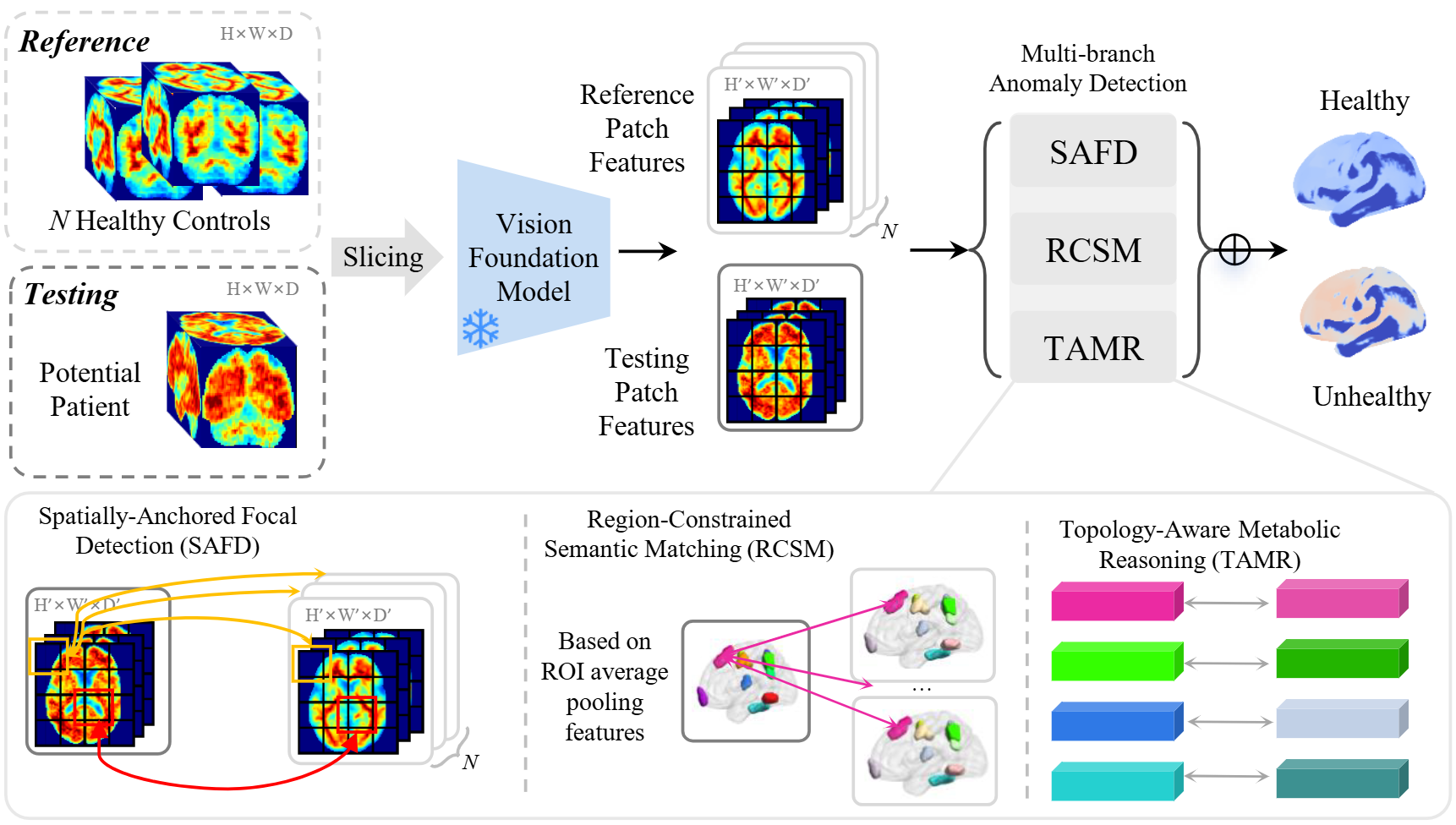
| May 08, 2026 | Our paper TracerAD is early accepted by MICCAI 2026 (top 9%). |
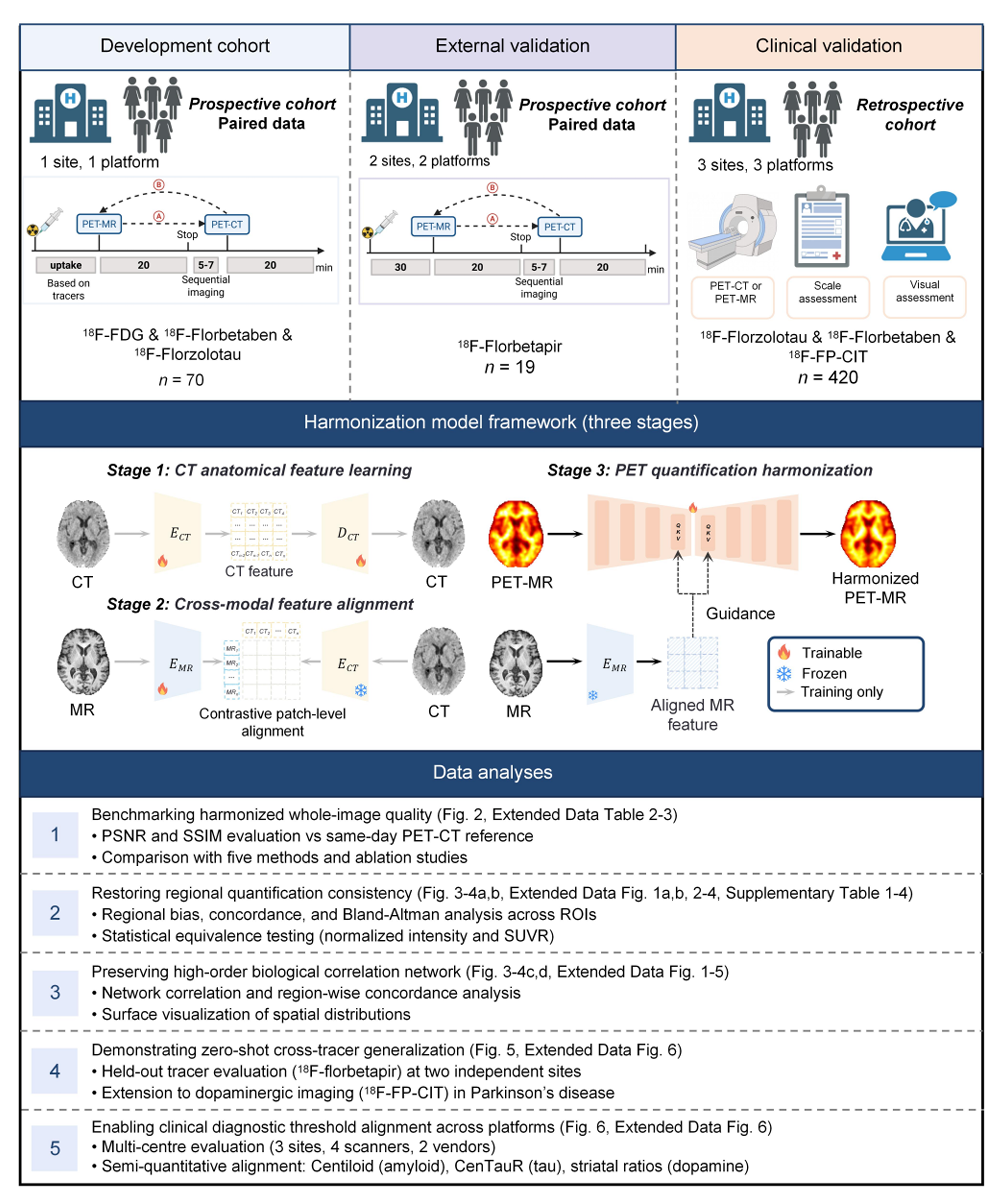
| Mar 23, 2026 | Our paper is accepted by npj Digital Medicine. |
| May 13, 2025 | Two papers are early accepted by MICCAI 2025 (top 11%). |
| Feb 27, 2025 | Our paper is accepted by CVPR 2025 and selected as Highlight. |
| Jan 05, 2025 | Our paper is accepted by European Journal of Nuclear Medicine and Molecular Imaging (EJNMMI). |
| Oct 10, 2024 | I win Young Scientist Award in MICCAI 2024 for our paper MetaAD. |
| Sep 15, 2024 | Our paper MetaAD is selected as Oral by MICCAI 2024. |
| May 10, 2024 | Our paper is early accepted by MICCAI 2024 (top 11%). |
Selected Publications
- MICCAI (Young Scientist Award)
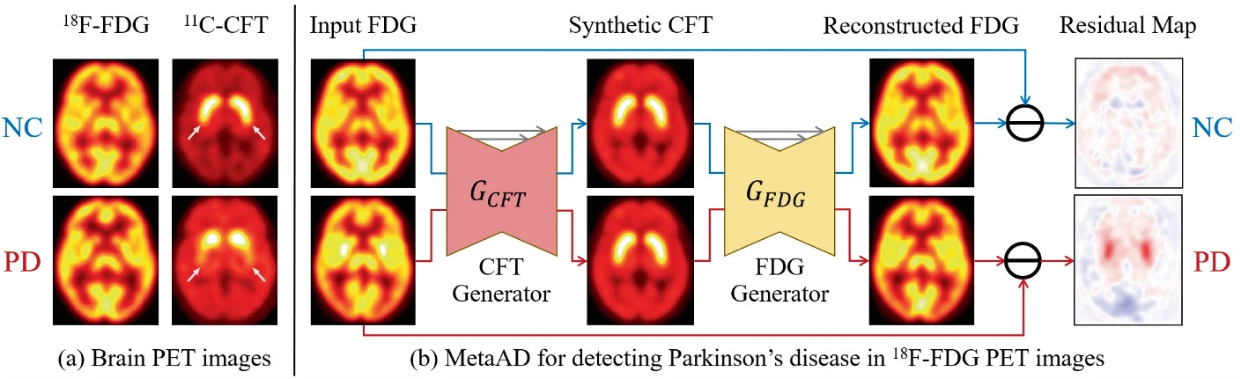 MetaAD: Metabolism-Aware Anomaly Detection for Parkinson’s Disease in 3D 18F-FDG PETIn Medical Image Computing and Computer Assisted Intervention , Oct 2024